







Process
Every loop needs a hidden cut
A seamless loop is not one long move that happens to end where it began. It is a cut you hide so well that nobody looks for it.

Clients ask for seamless loops more than anything else. Ten seconds that can play for an hour behind a band, on a shop screen, or at the top of a website. The first loops I made were long camera moves that came back to the start. They all had the same problem: you could feel the moment the move turned around.
Hide the cut in the busiest frame
The trick is to stop thinking of a loop as one move. Think of it as two halves with a cut between them, and put the cut where the eye is busy. A collision, a flash of light, a turn that fills the frame. Nobody looks for a seam in the middle of an event.

Match the motion, not just the pixels
Matching the first and last frame is the easy part. Matching the speed is what sells it. If a form is still turning at the last frame, it has to be turning at the same speed in the first frame. I check every loop by playing it three times in a row with the sound off, and I watch the edges of the frame, not the middle.
If you can see where it starts, it is not a loop. It is a video that repeats.
A note pinned above my desk
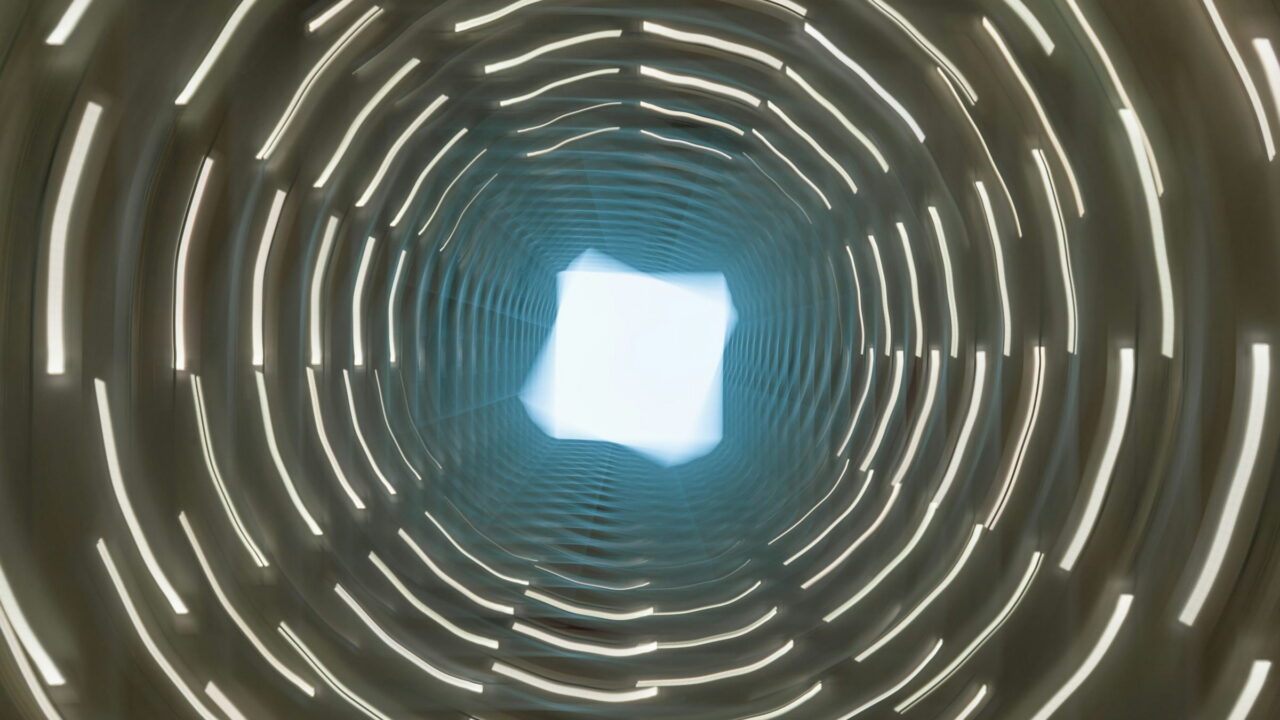
For the Slowlight idents, each loop turns a form a quarter turn at the tempo of the record. The cut sits on the beat. You can hear it if you know where it is. You cannot see it.